MUZZLE TRAINING YOUR DOG
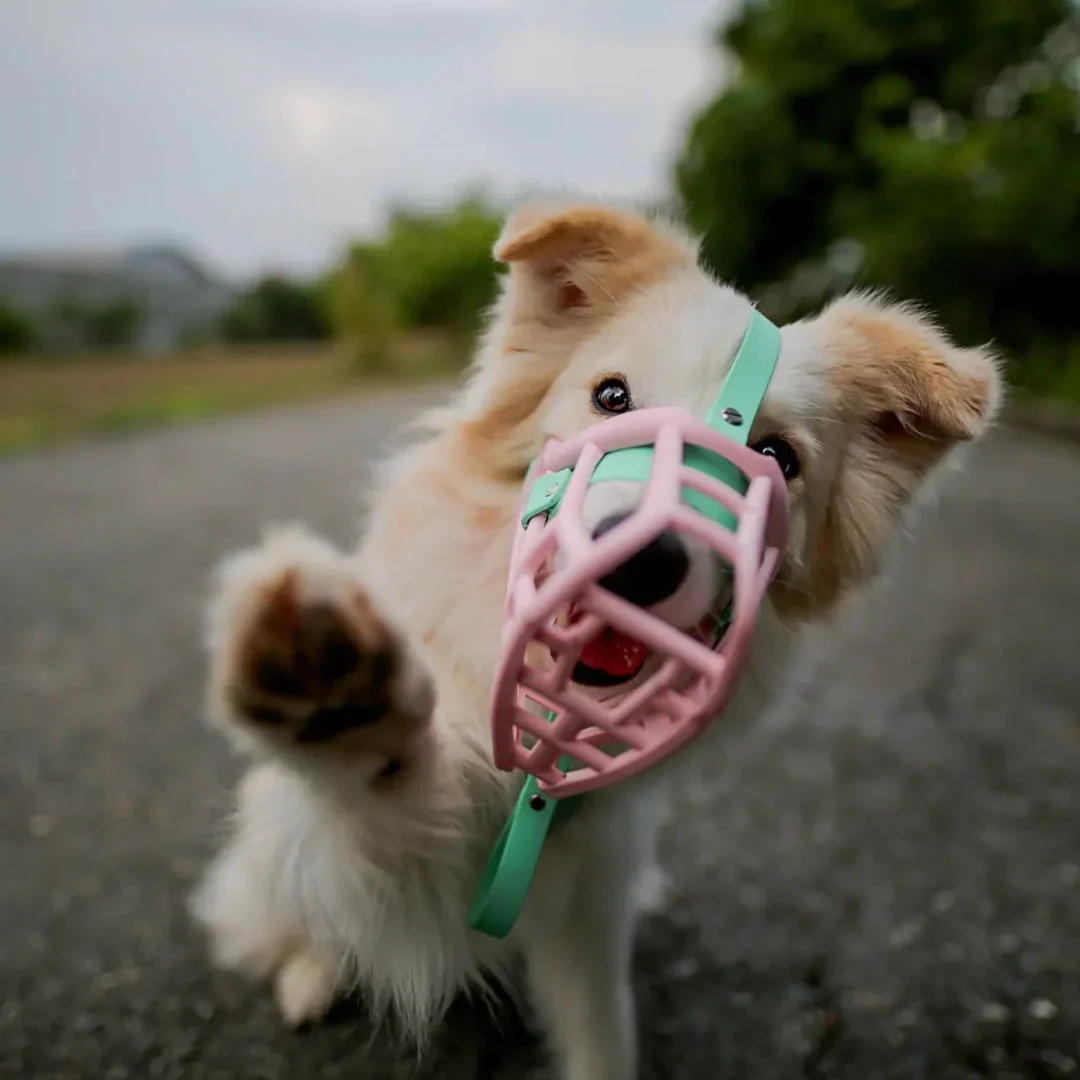
Why do dog’s wear muzzles?
Often the first thing that springs to mind when someone sees a dog wearing a muzzle is that the dog must be vicious, but there are many reasons why a dog might be wearing a muzzle. A dog wearing a muzzle might be:
- Prone to eating things they shouldn’t or on a strict diet for medical reasons.
- More likely to bite due to fear or pain.
- Required to wear a muzzle by law, for example if they are exempt banned breed or for any breed travelling on public transport in some countries.
- To prevent a dog catching wildlife.
- For a visit to the vet or groomers.
When muzzles are used on fearful dogs it is important to remember that they won’t make the dog feel better or safer. They should be used as a ‘safety net’ during training to help the dog feel more relaxed. If your dog snaps out of fear in any situation consult your vet and a behaviourist about how you can help them feel better.
It is beneficial for all dogs to be trained to wear a muzzle just in case one is needed. If a dog has previously worn a muzzle and had a good experience this reduces their stress when one is needed compared to wrestling a muzzle onto a scared dog in an emergency. Muzzle training can be a fun game if approached in the right way (see later).
What is the right style of muzzle for my dog?
There are two main sorts of muzzle available: basket muzzles and fabric muzzles.
Fabric muzzles fit the nose very snuggly and must only be worn under direct supervision for a short period of time. They are most commonly used for short veterinary or grooming tasks and some dogs seem to calm down when they are applied. Dogs can take small treats through a fabric muzzle, and they can also give you a nasty nip!
Basket muzzles are more suitable for wearing for longer periods and give more protection against bites. There are some designs only suited for short term wear (such as at the vets) as they give limited room for panting but do allow the dog to take treats and to drink. Muzzles designed to allow full panting room used to only be available for racing dogs like whippets and greyhounds but designs for all face shapes including bull breeds are now becoming more common.
If you need your dog to be able to wear a muzzle for longer periods including exercise and in the car ensure the design allows them to pant, drink, take treats, and vomit. Make sure the muzzle doesn’t restrict breathing or vision and is comfortable for your dog to wear. Some brachycephalic breeds like Pugs and French Bulldogs can be particularly tricky to find a comfortable and safe muzzle for so consult your vet for advice.
When measuring your dog for a muzzle, measure from the tip of their nose to just below their eyes and the widest part of the nose. Allow at least 1cm between the end of your dog’s nose and the muzzle. Make sure the straps will prevent the muzzle coming off, but don’t dig into your dog. You should be able to slide a finger comfortably under the straps.
How do I Train my dog to wear a muzzle?
It is easiest to muzzle train a dog if they have not previously had bad experiences. If your dog is already shy about being touched on the face, has any pain issues with their mouth, face or ears, or if they are aggressive around treats you need to speak to your vet and a behaviourist before starting muzzle training.
There are many different ways to muzzle train your dog. If your dog hasn’t had a bad experience you might want to start with an actual muzzle straight away. If your dog has previously had poor experiences with muzzle start with a yogurt pot with some holes in the bottom.
Assemble everything you will need in a quiet, familiar, distraction free space. Plan for short training sessions several times a week and always end with success. Repeat each stage several times until you are sure your dog is ready to move on.
You will need: a muzzle or plastic pot with holes, tasty treats, a clicker (optional).
- Bring out the pot or muzzle, immediately give your dog a treat (after using the clicker or a marker word like ‘good’). Repeat until your dog is anticipating a treat when the muzzle appears.
- Place a treat in the pot/muzzle. If your dog moves towards the muzzle click/mark and give a treat. Some dogs will stick their nose straight in, others may get closer in stages.
- Once your dog is putting their nose into the muzzle you can hold the treat outside and pop it in once the nose is in.
- When your dog is confidently sticking their nose in the muzzle for a few seconds add a word which you can use as a cure for them, ‘muzzle’ ‘party hat’ ‘nose cone’… it doesn’t matter what word you choose but be consistent.
Once your dog is happy to have their nose in the pot/ muzzle for a reasonable period of time before a treat, the next step is to fasten the strap. Some dogs don’t like this so you may need to work on it separately.
- Make the neck strap into a big loop and hold it so the dog can see. Click/mark and give a treat.
- Hold a treat near the loop, click and treat.
- Hold the treat on the other side so the dogs puts their nose through… click and treat.
- Move the treat so the dog puts their neck through.
- Once your dog is happy to put their neck through lift up the muzzle and ask them to stick their nose in for a reward.
- Once the nose is in, gradually tighten the neck loop.
- Slowly build up the length of time your dog wears the muzzle. They should wear it for things they enjoy such as sofa snuggles, grooming, trick training, and then out on walks.
During training it is important not to overfeed! You can use some of your dog’s normal food, or choose small, tasty treats cut into small pieces.
Dogs might feel anxious the first time they meet people and dogs whilst wearing their muzzle as they can’t communicate with their facial expressions as effectively. If possible, do some training sessions with other friendly dogs around to build their confidence. At all times during training monitor your dog for signs of stress.
What do I do if my dog tries to remove the muzzle?
If your dog starts pawing at the muzzle during training, it is likely that you have gone too fast and skipped a few stages. Go back to the last point your dog seemed comfortable and build up more slowly.
If your dog occasionally tried to remove the muzzle on walks, instead of telling them off try asking for a behaviour they can do such as sit or give paw to distract them, and so you can pay out a tasty reward.
If your dog has been good in their muzzle but then starts trying to get it off check carefully for damage to the muzzle or skin irritation that could be making it uncomfortable to wear.
Using a muzzle in an emergency
Sometimes during muzzle training it will be necessary for your dog to wear a muzzle even though they are not fully comfortable and this risks setting back your training. Situations where this might be necessary include a vet, behaviourist, or groomer visit. In these cases, try to use a different type of muzzle to the one you are training with, and go back several stages on your next training session.
TRAINING IS LIFE!
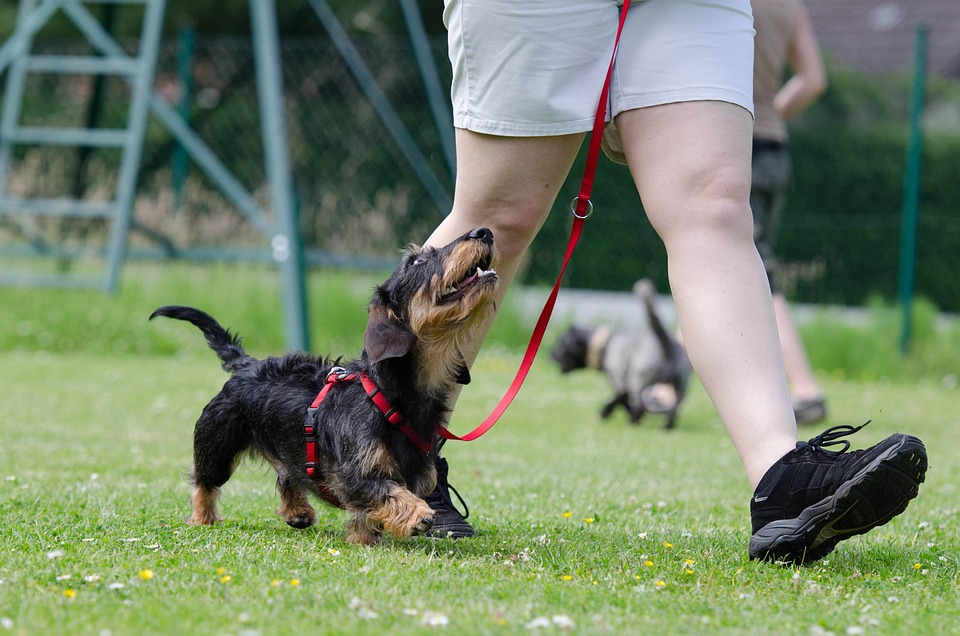
WHAT’S WITH ALL THE TRAINING? LET DOGS BE DOGS!
I follow lots of positive reinforcement and force free dog trainers and behaviourists on social media. Some of them produce the most amazing content which I share, and there are always new ideas to be picked up. But not everyone following them is a fan. On one post about a training exercises and owner commented, “why are you always training your dogs?” She said she hadn’t trained her dog at all and he was just naturally well behaved. “Why,” she asked, “should I tell my dog what to do all the time? We just love walks and hanging out. He chased a deer once so we keep him on the lead near them now.” On a gundog training group a new puppy owner asked, “When should I start training my puppy? He is 10 weeks old.” The first answer was, “I don’t train my puppies until they are 6months old.”

ALL DOGS NEED TRAINING!
Were these people lying? No. They just have a different definition of training to me. But the idea that they haven’t trained their dogs is just nuts!
Take the first lady. She definitely doesn’t just allow her dog to be a dog. Just being a dog would mean he slept where he wanted, took any food he found, toileted when and where he chose, and explored the world at will. She has taught her dog to walk on a lead without pulling, and to come back when called (unless there are deer about!). Indoors she has set out the ground rules about where the dog can go, toilet trained the dog, taught food manners, and a host of other things that make her dog nice to be around. She just doesn’t call setting some basic rules on good manners and teaching them to the dog ‘training’. But it is! Her dog can only ‘relax and be a dog’ because he has been taught the rules that allow that to happen.
Take our gundog guy. If the novice follows his advice to the letter he will be looking for someone like me to help him out when his 7 month old Cocker is a self-employed hunting machine and menace to all furred and feathered creatures. The gundog guy means that he doesn’t start formal training until 6 months. The gundog guy doesn’t call rolling socks along the floor for his puppy to fetch, using a whistle to call the pup in for his grub, waiting until the puppy sits before feeding him, or playing tennis ball hide-and-seek in the long grass training. But that is exactly what it is.
WHEN SHOULD I START PUPPY TRAINING?
Before your puppy comes home agree a list of ‘ground rules’ with the other people in your house. Agree the words you will use as cues for your puppy, and ask the breeder what cues they have already introduced (a puppy from a good breeder will come with some basic training already started!).
As soon as your puppy is home use food and toys and the comfort of being near you to start moulding their behaviour to fit your ground rules. But be flexible… you aim might be for your puppy to sleep in the kitchen on their own, but they might need you closer for their first few nights.
TRAINING IS LIFE, AND LIFE IS LEARNING.
From the minute your puppy opens their eyes, to the minute they fall asleep they are learning, so you are training! If you aren’t helping your puppy to learn the right behaviours by setting them up for success, you are making lie harer for both of you in the long run.
Training isn’t just sit, stay, come, give paw and roll over. The best owners help their puppies to learn self control and life-skills as well as following cues.
LIFE LONG LEARNING FOR DOGS- RESOURCES
We highly recommend enrolling in a puppy class either in person or online. Choose a trainer who uses positive methods (they may call themselves positive, fear free, force free or similar).
You might also enjoy the following books:
Mission Control – Jane Ardern: a book that uses fun games to help dogs learn self control.
Life Skills for Puppies – Helen Zulch and Daniel Mills: how to have a dog that fits into the modern world.
Easy Peasy Puppy Squeazy – Steve Mann: A very easy to read, and funny, guide to understanding and training your puppy
THE FIRST RULE OF RECALL

HELP, MY DOG HAS LOST HIS RECALL!
This is a story about me, my dog, and the first rule of recall.
We went to the beach, me and my five dogs. The beach at low tide is fun time. There is no real training, there are very few rules. The dogs can run, play, swim. They need to come back when I ask so that they don’t scare kids, annoy dogs on leads, or chase sea gulls.
When the senior dog chose scavenging on the stone instead of paddling I was cool with that, we could see each other and the beach was pretty empty. As we approached a busier but of beach I called him, he looked at me, then chose to keep mooching up the beach. I called again, and whistled. He moved away. I tried a stop whistle…he moved further away. He looked concerned. I ran up the beach, not to chase him but to try and cut him off. He looked very worried. I am now calling him like some demented banshee, not an experienced dog trainer and behaviourist. I wave the treat bag…nothing.
I now tell him to “go and love himself” (or word to that effect!) and head off down the beach to give the rest of the crew some snacks. This has the desired effect and down comes senior spaniel in that crabby posture that means ‘don’t beat me’. He doesn’t get beaten, but all spaniels know this pose.
I am fuming. This is not the relaxed beach walk I wanted and my reliable old boy is being an idiot. So what do I do? I take a deep breath and do ‘The First Rule of Recall’ I pop him on the lead and I tell him he’s a good boy, and he gets some treats. We walk a while with him on the lead, then do some short freedom and recall and reward practises. But what went wrong?
HOW TO KILL YOUR DOG’S RECALL
I can guess what happened. Senior dog has been allowed to run free on walks with my other half. Sometimes he goes on a spaniel mission and chases a duck, eats some bits a hawk has left behind. Sometimes he doesn’t listen when he’s called. After all, why would he come back? Mr Owner doesn’t have a ball, doesn’t have treats, puts him on the lead and takes him home. Senior dog is having a much better time making his own games with the ducks and his own snacks of bits of dead rabbit. Senior spaniel can hear Mr Owner getting cross (Mr Owner is going to be late for work now) and eventually he goes back. Mr Owner tells senior spaniel off and route marches him home. Fun? No.
What has senior spaniel learned? To avoid going back because it ends the fun and gets you shouted at.
HOW TO FIX YOUR DOG’S RECALL
The First Rule of Recall
No matter how cross you are, how later you are, how embarrassed you are, when your dog comes back pop their lead on and then reward them. If they have ignored multiple recall cues, this can be low key. A ‘good boy’ and a low value treat. But NEVER punish them. If you shout, or worse, you are only punishing your dog for coming back. He can’t understand you are punishing him for ignoring you. Punishing the dog when he is back with you makes a good recall next time LESS likely.
As you walk along with your ‘naughty’ dog on his lead, think about why this happened.
Have you regularly made coming back more rewarding than not coming back? If you only call your dog up to stop him saying hello to another dog, leaping into a stinky bog, or to go home… you are the fun police. Spice up the recall reward, even with older dogs. Sometimes recall for a game, sometimes for a treat, sometimes for a bit of lead walking before getting let off to run again. Try to recall your dog before they are self rewarding with a game of chase the squirrel and make sure what you have on offer is just as much fun. Occasionally add a jackpot recall reward like a big juicy sausage! Think about adding a clear cue such as a whistle that can never sounds cross and will carry a long way.
ALL’S WELL THAT ENDS WELL
The rest of our walk was better. Senior dog got fishy snacks for staying with me and Mr Owner will be given some rules on what to do when he walks senior dog! Training is never over…
HELP WITH RECALL
If your dog has a recall problem there are lots of exercises that can help improve things. We offer one-to-one training sessions for minor training issues like this (but places are limited in the winter months) at £50 for 45minutes in our field. Please email health@holisticvetsussex.co.uk for information and booking.