GETTING A NEW PUPPY

Deciding to add a new puppy to your family is big decision that can’t be taken lightly. A puppy is a 15-year commitment, and you are responsible for every aspect of their life. Puppies are great fun, but they are also hard work. By planning ahead and being prepared you can choose the perfect new best friend.
Am I ready for a puppy?
There are many benefits to adding a puppy to your family. Studies show that pet ownership can reduce stress and improve physical and mental health. However, it isn’t fair to get a puppy to try and fix problems in your life.
A puppy won’t be a running or hiking partner for 12-18months and they will test your patience at many stages in their development. Puppies can be great companions for children, and some can help children and young adults with additional needs, but not all puppies are suitable for these roles and specialist advice should be sought.
With correct preparation, and adequate physical and mental stimulation adult dogs can be eft for several hours a day while their families are at work and school. Puppies need someone at home with them all the time for their first few weeks as they settle in an learn that they can be safe ‘home alone’. Before bringing a puppy home it is important that you have arrangements in place for their support in the first weeks and beyond.
Puppies are expensive, a 2023 study suggested that a dog costs over £1500 a year to care for. Before looking for a puppy ensure that you have the budget for their purchase price or adoption fee as well as investigating the costs of daily care such as feeding, bedding, routine veterinary care, and insurance. You also need to be able to fund emergency care and have a plan about who will care for your dog if you can’t, both short and long term.
What sort of puppy would suit my family?
There are over 200 pedigree dog breeds recognised by the Kennel Club in the UK, and many more across the world. There are also lots of popular crossbreeds such as ‘Labradoodles’ and Lurchers, as well as mixed breeds. There is a breed, cross, or type of dog out there to suit almost every family!
When thinking about what sort of puppy will suit your family think about how active you are, how big your home is, how much time you will have for grooming, and whether you might want to take part on any dog sports. Surprisingly some large breeds can be very chilled out and take up less space in the home than very active smaller breeds! The Kennel Club website has descriptions of all the recognised breeds and suggestions on how much exercise and grooming they need which can be helpful in drawing up a shortlist.
Breed enthusiasts are always happy to talk to prospective puppy families about whether a breed will suit them. Discover Dogs at Crufts in March is an excellent place to meet the breeds in real life and maybe meet breeds you’d never considered! If you are considering a crossbreed, look at the profiles of the parent breeds as your puppy could show a mix of those traits.
Research what breeds were developed for. Expect spaniels to hunt, collies to herd, terriers to dig, and many small dogs to bark. Once you have chosen a breed, or at least made a shortlist, and met those breeds in person, you can start looking for a puppy!
Where should I look for a new puppy?
The best way to find a new best friend is to make contact with a breeder who has a litter planned. This allows you to meet the mother and maybe the father and discuss whether the puppies they have planned will fit in well to your home. Breeders may list planned litters on their website or on breed club websites and will want to have a good waiting list of prospective buyers before mating their dogs.
The Kennel Club website lists registered puppies for sale, as do some specialist dog websites. Be wary of puppies advertised in the local paper or on free-ad sites. The best breeders rehome their puppies by word of mouth and may never advertise at all.
Rescue and rehoming centres occasionally have puppies available which may be pure or mixed breed. Unlike puppies from a breeder, you won’t usually be able to find out anything about the father. Rescue pups can be a real surprise and may turn out very different from their mother.
When searching for a puppy expect to be asked lots of questions by the breeder or rescue to determine if you are able to offer a suitable home. You should also have your own list of questions. Important things to ask about include:
- Are the puppies raised in the home?
- Why did you breed this litter?
- Can I see the health tests for mum and dad?
- Will I be able to watch the development of the litter on a video stream or similar?
- Will my puppy be vaccinated/ flea treated/ wormed?
- What do you do to get the puppies ready for the outside world?
Remember that being on a waiting list is no guarantee of getting a puppy. If you are not successful the breeder may be able to recommend another litter, or suggest you wait until they breed again. The right puppy is worth waiting for.
How do I choose my new puppy?
You should be able to visit the litter from about 4 weeks of age when the mum is more relaxed about visitors (and the puppies are more interesting!). Some breeders will help you choose the puppy that best suits your circumstances, but generally avoid any very shy or nervous puppies unless you have a lot of puppy raising experience. Your choice may be limited if you are specific about the gender or colour of puppy you want.
Usually after spending a bit of time being climbed all over by a busy litter of puppies there will be one or two that take your eye. The breeder should be able to tell you about their personality, though bear in mind that this can change as they grow up.
What do I need before I bring my puppy home?
Good breeders and rehoming centres will provide an information pack for you to read through outlining how they have raised the litter, and what you will need to do when you get your puppy home. Key information you need includes:
- When the puppy has been vaccinated/ flea treated/ wormed and when this is due again.
- Information on the breed including health issues, grooming needs, training and exercise requirements.
- Information on diet (what they have been feeding, how much and when).
You should prepare for your new puppy by setting up a crate or bed in a pen to provide a safe and secure ‘bedroom’ for them. Buy in some of the food they have been eating and some tasty puppy treats. Consider plugging in a calming pheromone diffuser a few days before your puppy comes home to help them settle in.Calming collars and sprays can also be very useful to help your puppy during the first few stressful days
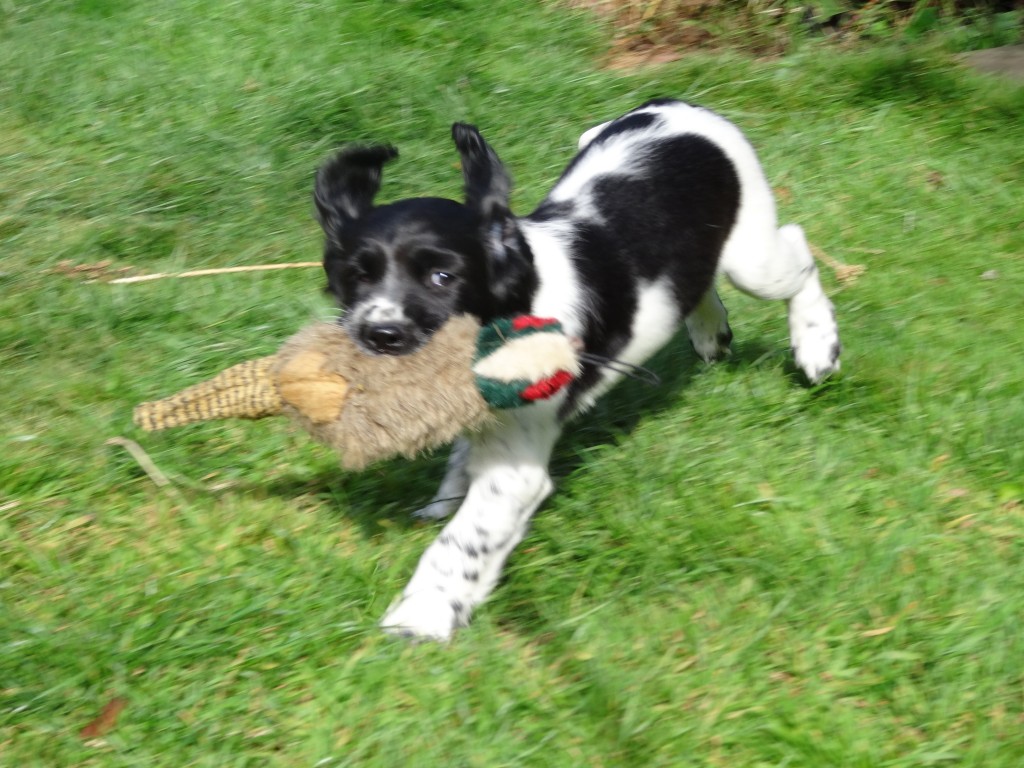
Choose some suitable toys for your puppy. Your puppy will appreciate a soft toy to snuggle up with and toys that you can fill with foodlike this chewy snake. Get a suitable sized collar for your puppy with a tag engraved with your name and address on.
Your puppy needs to be secure on their journey home so look for a travel box that you can snuggle them into. It is useful to have someone to watch the puppy on the journey home and someone else to drive to avoid dangerous distractions. Pheremone spray can be used in the travel box and try to take a toy or bit of bedding from the breeder which smells familiar.
When you collect your puppy expect to sign a contract which is designed to protect your rights, the breeder, and most importantly the puppy! You should receive your puppy’s microchip information (it is a legal requirement that puppies are chipped before sale), and registration documents, and information on their vaccinations (if given), flea, and worm treatment.
First days and nights with my new puppy!
Going to a new home is very stressful for a puppy, no matter how well the breeder and their new family have prepared. When you get your puppy home let them into a secure outdoor space to go to the toilet and then settle them into their puppy den. Offer some food and water, but don’t be surprised if they need coaxing to eat at first.
In the first few days just let your puppy settle in, bond with you, and learn where they should go to the toilet. Take them out for regular toileting breaks and play sessions but appreciate that your new arrival will need 16-18 hours sleep!
Your puppy may be unsettled at night at first as they will always have slept with their siblings. Some puppies will be happy in their pen on their own as long as you are nearby when they fall asleep. Others will wake frequently and need regular reassurance so you may want them to sleep near your bed, or you might camp out on the sofa! Your puppy will need to go to the toilet at some point in the night and you can choose to wake them up at a set time and take them out, or to wait for them to wake you up. Each day they should be able to hold things a little longer but expect accidents and setbacks.
If you want to change your puppy onto a new food, do this after 1-2 weeks when your puppy is settled in. Mix the new food in with the old one over a few days to avoid your puppy getting a tummy upset.
Book you puppy in for a vet visit in the first week for a health check, and to discuss vaccinations, flea, and worm treatments.
Our Vet Vicky LOVES to talk to potential puppy owners about making the best choice, as well as supporting them through those early days. Contact us at health@holisticvetsussex.co.uk for any puppy help!
PUPPIES AND KITTENS!
PLANNING A PUPPY OR KITTEN?
As the days get longer and the weather gets better, the idea of getting a new puppy or kitten may become appealing. Kitten season starts in the spring and many dog breeders prefer spring and summer litters so their puppies can enjoy some time outdoors.
SHOP OR ADOPT?
Taking on a pet from a rehoming centre can be very rewarding, but it isn’t always the right option. Rehoming centres may have puppies and kittens available, but information on their parents health and temperament will usually be unknown. If you rehome an adult animal, you will know much more about its size and temperament and you might be lucky enough to find yourself an instant pet with no need for housetraining. However, many pets in rehoming centres will need time and sensitive handling to manage behavioural problems. If you plan to compete or work your dog, then buying a puppy will give you a blank slate to work with, but many rehomed dogs can be trained to a high level and the police, support dog charities, and agility competitors often choose rehomed dogs.
I WANT A PUPPY
The advantage to choosing a puppy from a breeder is that you should be able to get all the information on the parents (and maybe several generations back) and to see how your puppy had been reared. Ideally choose your breed after researching breed club websites and meeting the breed. Crufts Dog Show in March has a Discover Dogs area where you can meet all the KC recognised breeds as well as areas where you can talk to experts about dog sports and training. Once you have chosen a breed which suits your lifestyle, look for a breeder. If you can find a breeder before the pups are born you will be able to follow your pups progress and the breeder can start to get your pup ready for their new life.
The best dog breeders are passionate! Expect to be shown health test results for mum and dad, as well as hearing about why their dogs are wonderful. This might be show or competition wins, their working prowess, or (most importantly) just why they are fantastic companions. Expect to be asked a lot of questions; breeders can be (and should be) very picky about where their puppies go. Good breeders offer lifetime support, and will help with rehoming if you can’t keep your puppy (at any age), but they really want you to have a long and happy time together. Look for a puppy which is reared in the home and where the breeder is introducing the pups to the sights, sounds, and smells they will encounter when they leave home. Expect to sign a contract when buying, and to be given an information pack all about your new puppy.
Be on the lookout for bad breeders. They can be very hard to spot! Increasingly puppies from puppy farms are presented as being raised in a family home. If you are not visiting until puppies are ready for sale ask to see photographs and videos of the puppies as they have grown. Good breeders are going to take loads of photos and videos! Be very suspicious if you can’t see mum. Mum might not be living in with the puppies at 8weeks as they should be fully weaned before sale, but you should be able to meet her and see the puppies interact with her. Never be rushed into buying a puppy, and never buy a sick puppy or because you feel sorry for it. Consider taking some photos and report to Trading Standards and the RSPCA if you have any concerns.
I WANT A KITTEN
If you are looking for a pedigree kitten, similar advice applies as for puppies. GFC registered kittens can’t be sold before 15 weeks. Most kittens are not pedigrees and are the result of accidental matings of domestic cats. Farm kittens can have more independent characters and some remain resolutely feral so these may not be the best option for a city home.
Again, you should feel good about the home you are buying a kitten from. It should be clean, but show evidence that cats have lived there! A friendly mum increases the chance of friendly kittens, but remember that cats are often more shy with visitors than dogs. Do not buy a kitten if it or the mother show signs of diarrhoea or respiratory disease and avoid skinny sick kittens with pot bellies and a host of fleas!
CONGRATULATIONS…NOW FOR THE HARD WORK!
Having found your perfect pet partner, the hard work begins. Book in with your vet in the first week to discuss vaccinations and parasite control. Keep in touch with your breeder as they really love to know how their ‘babies’ are doing. Book classes for your puppy to learn basic obedience and socialisation, or provide indoor entertainment for your kitten! Spend time getting them used to handling and grooming…take lots of photos and enjoy your new arrival.