APPOINTMENTS AVAILABLE!

The return to lockdown means that all the bookings Vet Vicky had to work and compete her dogs have been cancelled until at least December. This means our diary is suddenly a bit empty.
We are not as restricted in the services we can offer during this lockdown so we would love to see some new patients for acupuncture, behavioural assessment, and holistic consultations. We are happy to offer phone or WhatsApp consultations for some behavioural issues, holistic consultations, and puppy support.
Email health@holisticvetsussex.co.uk for information.
Use us or lose us!
SUFFERING IN SILENCE?

IS YOUR PET IN PAIN?
OBVIOUS SIGNS OF PAIN
Most pet owners can notice obvious signs that their pet is in pain. These include limping, difficulty getting up after rest, and stiffness. Some animals may moan or yelp too.
LESS OBVIOUS SIGNS OF PAIN
Many pets hide their pain really well. Less obvious signs of pain include withdrawing from the family, changes in appetite and drinking, licking at joints, reluctance to jump, sleeping in different places, an anxious facial expression, behaviour changes including aggression, house soiling, and the vet’s favourite…just slowing down.
DIAGNOSING PAIN IN PETS
Your vet should do a very careful physical examination. This may start with watching your pet walk in straight lines, in circles, and maybe over obstacles. It can be very useful if you are able to video your pet at home to show how they jump (or don’t!) and move. This is especially useful for cats who often won’t move at the vet clinic!
Next your vet will feel all over your pet’s body and move all the joints. They may ask for dogs to be muzzled as the examination can be painful.
In some cases imaging of joints may be recommended, but in other cases a presumptive diagnosis will be made and treatment started.
TREATING PAIN IN PETS
MEDICATIONS
Don’t be afraid of medications! Modern non-steroidal drugs have minimal side-effects and can be used safely for long periods of time. They may be required for a short period of time if your pet has an injury, or longer with chronic conditions like arthritis. Regular blood tests are recommended with most medications to monitor your pet’s health. Do not use human medications as many are toxic to pets.
FOOD SUPPLEMENTS
Joint supplements are very popular. Few have shown any significant benefit in clinical trials, but most are unlikely to do any harm. Green lipped mussel is better supported by studies than other ingredients. Although most supplements are very safe it is advisable to speak to your vet before starting one to be sure it is suitable for your pet.
HERBAL SUPPLEMENTS
Everyone talks about turmeric, and it is a useful and powerful herb. But other herbs may be more suitable for your pet. Herbs can interact with conventional drugs so always speak to your vet before starting a herbal treatment (or ask for referral to a holistic vet!).
ACUPUNCTURE
Acupuncture can be very useful for muscular pain and is tolerated well by most pets. Pets with chronic pain may need regular treatments to keep them moving comfortably.
LASER
Class 4 laser therapy (also called photobiomodulation) can aid wound healing, improve blood flow to injured areas, and seems useful for painful joint and muscle conditions. Many veterinary practices now offer laser therapy. Red light machines sold for home use are less effective as they don’t penetrate deep into tissues.
PHYSICAL THERAPIES
Hydrotherapy, osteopathy, massage, and physiotherapy can all help your pet build muscle and improve their range of motion. They can also be really useful for pets who need to lose weight.
WEIGHT AND EXERCISE CONTROL
These two are free and are maybe the most important things we can do! Your veterinary practice will be able to advise on safe weight loss and exercise programmes.
WORRIED THAT YOUR PET IS IN PAIN?
Don’t worry any more! Call your vet and find out. Then, if you want to include some evidence based complementary therapy, get in touch with us!
Email health@holisticvetsussex.co.uk
HOLIDAY!

CLOSED UNTIL 29TH SEPTEMBER
Our vet is taking a well earned break!
Four Seasons Holistic Veterinary Care is CLOSED until Tuesday 29th September.
For urgent pet health problems please call your primary care vet.
Email or text with non-urgent enquiries but be aware they will not be dealt with until 29th.
WHO IS TREATING YOUR PET?
Looking for pet health advice?
Where do you go when you want pet health advice? Google, the pet shop, a book, your dog groomer, the vets?
It has never been easier to look for information on pet health and care, but how do you know which sources to trust, and who is allowed to treat your pet?
Your vet is your pet’s second best friend!
Your vet really does have your pet’s best interests at heart. Your vet should be your first port of call if your pet is unwell. All veterinary practices in the UK will have a vet or veterinary nurse to deal with your queries 24 hours a day (though this may be via an emergency clinic at night or weekends).
Some insurance companies offer access to a telephone or video triage service which can advise you on how urgent the problem is, and Veterinary Poisons Information Service have a line for owners worried their pet has eaten something toxic.
Your veterinary practice website might also have pages on a range of illnesses and symptoms.
Online support groups can be useful
Your vet may suggest an on-line support group or website for your pet’s condition. When these are run by vets, nurses, or even drug companies you can be sure of getting great advice. Be more careful with owner run groups as sometimes these are sources of poor, unqualified advice.
Who can help me treat my pet?
ONLY A VET!
Only a qualified vet can make a diagnosis or supply medicines for your pet. Recommending supplements and diets is a grey area, and you should consult your vet before making any changes.
Vets will often work with paraprofessionals including hydrotherapists, physiotherapists, and behavourists. But the buck always stops with the vet!
What about homeopathy and zoopharmacognosy?
Yep, even those must be done by a vet or under the instruction of a vet unless you are treating your own pet.
There are many vets offering a natural or holistic approach to veterinary care.
Why? Is it all about big pharma?
No, it’s all about animal protection. Animals are not little humans. They can react to chemicals in a very different way to humans. They also can’t communicate their needs or consent to treatments. Vets are trained and entrusted to make a diagnosis and choose the best treatment paths with the pet’s owner. Despite concerns, the RCVS has not banned vets from using complementary treatments, it just expects us to have considered all options and to have discussed the evidence for each treatment with the owner. Informed consent. We are also not allowed to make wild unsubstantiated claims about treatments. We have to do 35 hours of extra training every year to stay up to date. We have to be insured and pay for the RCVS to regulate us. If we suggest an unproven treatment which harms your pet without explaining the risks (be that conventional or complementary) or make an avoidable error in diagnosis… you have some comeback against us. Try taking an internet supplier with no registered address to court…
Prove it!
OUR TRIP TO CRUFTS!
CLOSED MARCH 5TH-8TH
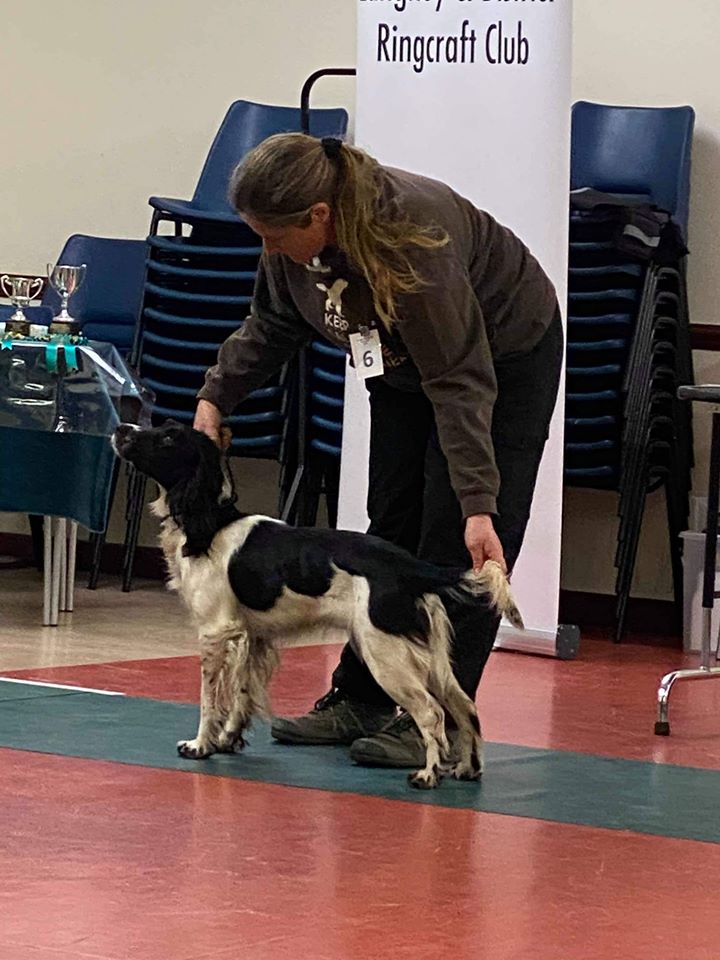
What is our vet Vicky doing in this photo? She is training working gundog Gadget for her trip to Crufts! That’s also why we won’t be available from the 5th-8th March.
Crufts is a must-visit for all dog-lovers. Not only can you watch showing classes, but there are activity rings where you can see flyball, agility, obedience, grooming, gundog demonstrations, and much more.
If you are thinking of getting a puppy visit the Discover Dogs area to find out which breed would be suitable for you. Or if you are interested in a rescue dog, several of the big rehoming charities have stands.
If you need a new lead, bed, dog coat…well, there are hundreds of stalls! The number of dog foods on show is bewildering, but you might find something new that suits your dog.
Dog health is well covered too with companies offering genetic testing, wellbeing products, worm egg counts and more.
We hope to see some of you at Crufts, it really is a celebration of all dogs, not just the purebred show dogs. But please remember only dogs entered for the show or invited by the Kennel Club can attend.
HAPPY NEW YEAR!

RESOLUTIONS?
Have you made any resolutions? Lose weight, get fit, read more, take up a new hobby? Ours is to write a blog post once a month! And to upgrade the website over the next few months.
BETTER PET HEALTH IN 2020!
What could be a better resolution that to commit to improving your pet’s health in 2020?
Four Seasons Holistic Veterinary Care is here to help you every step of the way!
MOBILITY
We offer acupuncture, physical therapy, herbal medicine, and weight loss advice to aid mobility in all pet species. This is Vicky’s main area of work and one of the most satisfying. She loves working with sporting dogs as well as the golden oldies. Email health@holisticvetsussex.co.uk for a referral form.
CHRONIC ILLNESS
Would you like to manage your pet’s diabetes, epilepsy, liver problems, kidney problems, skin issues, or other chronic disease using changes to diet and holistic therapies alongside conventional treatments? Email health@holisticvetsussex.co.uk for a referral form. We work alongside your vet to improve the health of your pet.
PROBLEM BEHAVIOUR
Our vet Vicky Payne is one of a small number of behaviourists to hold a level 6 qualification in companion animal behaviour and training from COAPE. She backs this up with many years of practical experience working with dogs, cats, and small pets. Unlike many behaviourists, Vicky can assess your pet for pain and understand the behavioural side effects of illnesses and medications. She can prescribe herbal or conventional medications where pets need a helping hand to start their behavioural recovery. Email health@holisticvetsussex.co.uk for a behavioural questionnaire and a referral form.
We wish you a very happy and healthy 2020, but we are also looking forward to helping more animals and their owners when things go wrong.
HOLIDAY
HOLIDAY!

Four Seasons Holistic Veterinary Care is CLOSED from 7pm Thursday 21st June until 10am Monday 9th July.
We will not be answering calls, listening to voicemail messages, checking texts, looking at emails, or monitoring the Facebook page!
Please email health@holisticvetsussex for any non-urgent queries which will be dealt with from 10th July onwards.
For urgent pet health problems please contact your Primary Care Practice.
New Year’s Resolution!
HAPPY NEW YEAR!
We want to say sorry for not keeping on top of the blog as well as we should have done this year. We’ve been very busy with Vicky our vet breeding a litter of puppies as well as completing coursework for her behaviour qualification.
HOLISTIC VETERINARY CLINICS:
Goudhurst Vets, Bedgebury Road on Thursdays from 11.30. Call direct on 01580 211981.
Companion Care Vets Eastbourne, Lottbridge Drove on Mondays and Fridays. Call direct on 01323 649315.
Home visits are available on Tuesdays, Wednesdays, and Thursdays within a 15mile radius of Ninfield (Battle, Bexhill, Hastings, St Leonards, Westfield, Fairlight for example). Call or text on 07958142959, or email health@holistcvetsussex.co.uk
HOLISTIC VETERINARY SERVICES AVAILABLE:
Herbal Medicine; we use practitioner only tinctures and herbal tablets, as well as supplements from Nutravet. In most cases we produce bespoke combinations of herbs specifically designed for your pet. Herbal medicines can be used alongside conventional medicines to increase their effects, or to reduce side effects, or they can be used on their own where conventional medicines are unavailable or unsuitable.
Acupuncture: we use acupuncture extensively for musculoskeletal problems, from muscle sprains in working dogs, to arthritis in older animals. We have also had success in some spinal injury cases, and in pets with incontinence.
Physiotherapy; we frequently recommend that owners carry out exercises at home to help their pet’s mobility, sometimes we will also recommend treatment by canine therapists such as bowen therapists and hydrotherapists.
Behaviour; Vicky is a trained animal behaviourist and is happy to discuss prevention of problems in young animals, as well as helping owners understand and treat their pet’s behaviour problems. An understanding of the behavioural needs of pets also means we can help them cope with changes to their lifestyle caused by illness or injury.
Nutrition; we feel a good diet is the key to a healthy pet! We fully support those owners who want to raw feed, but can also help adapt other diets to improve health and behaviour.
Pupternity Leave
PUPTERNITY LEAVE
Just a short post today to let you know we will have very limited availability for appointments for the next 2 weeks as vet Vicky’s dog is expecting a litter!
Hugging Dogs
DON’T HUG YOUR DOG!
Really? Well, that’s the headline…but you know us, we like to get behind the headlines.
DOGS DON’T LIKE HUGS!
Researchers studied 250 photographs of dogs being hugged and concluded that 80% of them showed signs of being unhappy which has lead to hysterical headlines in the papers, online, on TV and radio, yet every post we’ve seen has pet owners fighting back, “but my dog loves cuddles”!
Most dogs do enjoy physical contact with humans. Many come to us for stroking and tummy rubs, push their heads under our hands, and try to climb up on our laps for cuddles. Stroking or grooming a dog can have positive effects on both parties, with both getting a hit of oxytocin – a hormone normally associated with bonding between mums and babies, or between lovers. The problem comes when a dog is restrained for cuddles against his wishes. A dog who has come to his owner for affection will be feeling quite different from one who has been unwillingly grabbed for a dog hug selfie! In this circumstance the dog may feel afraid and trapped and may show signs of distress. The same can happen if a dog is approached by strangers or children who try to stroke or cuddle. Dogs are not so different to humans…think how good a hug from a friend makes you feel, then think about how uncomfortable a hug from a total stranger in the street might feel!
How can you tell if your dog is comfortable with a hug? Your dogs has many subtle ways of telling you how he feels but they can be quite subtle. If he’s struggling and trying to get away that’s a pretty clear sign he doesn’t want a cuddle! If he is licking his lips, you can see the whites of his eyes, his mouth is closed with tight lips, and he seems to be looking away from you, he also doesn’t want a cuddle. Ignore these signs as your dog might feel he has to warn you with a growl, and if he’s still ignored he might snap at you. He won’t mean to bite first time, but humans are so slow…. Be especially careful to watch for these warning signs when children or friends are petting your dog, and never be afraid to step in and protect him from unwanted physical attention.
We don’t often post links tat take you away from our page, but this one has a nice slideshow about dog body language: http://www.doggonesafe.com/speak_dog
DOGS LIKE HUGS FROM PEOPLE THEY KNOW AND TRUST
The ‘take home’ message is don’t stop touching your dog! But do learn to ‘listen’ to his body language and respect him when he doesn’t want a cuddle.